

What Is the Best Water Control Gate in 2026?
Choosing the best water control gate in 2026 requires more than comparing prices or glossy product images. The right gate must manage water safely, resist corrosion, and perform reliably under changing conditions. A canal operator may need precise flow adjustment, while a flood-control project may prioritize rapid closure during extreme rainfall. These are different tasks. One gate cannot suit every site.
A dependable water control gate should match the channel size, water pressure, operating frequency, and maintenance plan. Stainless steel, coated carbon steel, and reinforced components each offer practical advantages. However, material choice depends on water chemistry and local exposure. Field experience also matters. A gate that works smoothly during a dry inspection may behave differently after months of sediment, algae, and debris. Small details count. Seals must remain flexible. Hoists should be accessible. Emergency operation cannot be an afterthought.
This guide examines leading gate types, control methods, materials, and installation concerns for 2026. It considers engineering performance, service life, operator safety, and long-term ownership costs. Manufacturer testing and recognized technical standards can support better decisions, but they do not replace site-specific evaluation. That is an important limitation. The “best” choice may still fail if the channel design is misunderstood or maintenance is neglected. Readers should compare verified specifications, request project references, and consult qualified water-management professionals before installation. Practical evidence beats confident marketing.
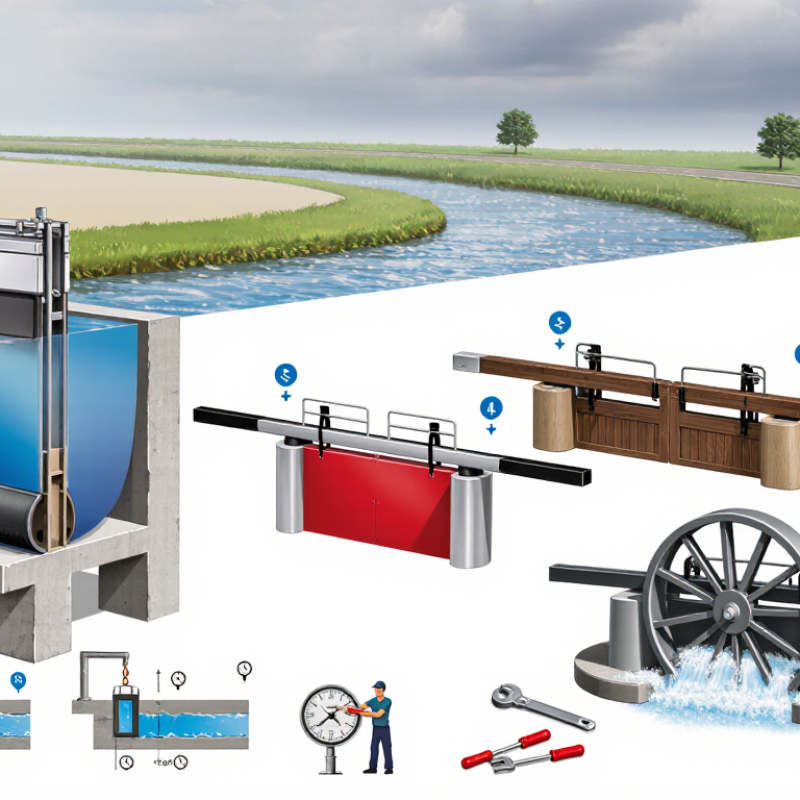
What Is a Water Control Gate and How Does It Work?
A water control gate is a movable barrier installed across a channel, dam, or reservoir outlet. It controls water level, discharge, and flow direction. When the gate rises, water passes beneath or through its opening. When it lowers, the passage becomes restricted. Water pressure increases with depth, so the gate structure must resist heavy, uneven forces. Small changes matter.
Gate types suit different conditions. Vertical slide gates work well in compact channels and drainage systems. Radial gates reduce lifting force through their curved design. Flap gates respond automatically to changing water levels, but debris can limit their movement. The best water control gate in 2026 depends on flow rate, sediment, head pressure, maintenance access, and emergency needs. The U.S. Army Corps of Engineers’ National Inventory of Dams reports more than 90,000 dams in the United States, showing how varied these installations can be.
The UNESCO World Water Development Report 2024 states that agriculture accounts for about 70% of global freshwater withdrawals. This increases demand for accurate irrigation control. A reliable gate should include corrosion-resistant materials, visible position indicators, and tested backup operation. Operators should inspect seals, hinges, hoists, and embedded concrete regularly. Sediment is easy to underestimate. Remote sensors can improve response time, yet automation cannot replace physical inspections. The weak point is often maintenance, not design. A gate may meet its specifications and still fail when debris blocks the opening or power is unavailable.

What Is the Best Water Control Gate in 2026?
A water control gate regulates the flow, level, or storage of water by changing the size of an opening. This chart shows the calculated discharge of a rectangular sluice gate at different openings. Larger openings allow more water to pass when the gate width, upstream head, and discharge coefficient remain constant.
Model assumptions: gate width = 2.0 m, upstream water head = 1.5 m, discharge coefficient = 0.62, and gravitational acceleration = 9.81 m/s². Values are calculated using Q = Cd × b × a × √(2gH), where Q is discharge, b is gate width, a is gate opening, and H is upstream head.
Which Types of Water Control Gates Are Available in 2026?
What Is the Best Water Control Gate in 2026?
In 2026, the best gate depends on flow, pressure, debris, and maintenance access. No single design fits every channel. Sluice gates provide precise level control in canals, drainage systems, and treatment facilities. Slide gates suit compact openings and steady water movement. Their sealing performance depends heavily on correct installation.
Radial gates handle wide, high-flow channels with reduced lifting force. Flap gates work well on outfalls because water pressure can open or close them automatically. Stop-log gates offer simple isolation during repairs, although changing water levels may require manual handling. Weir gates control upstream levels, while inflatable gates provide flexible regulation where storage and seasonal flow changes matter. I have found that debris often causes more trouble than expected. A gate can be technically suitable yet unreliable beside branches, silt, or floating waste.
Tips:
Measure the opening, design head, flow rate, and debris load before choosing a gate. Check corrosion resistance, emergency access, seal replacement, and actuator protection. Ask for tested leakage data, installation records, and a maintenance schedule. Local operators should review the design because real channels rarely behave like drawings. Leave safe clearance around moving parts. Also, avoid selecting the cheapest option too quickly; energy use, cleaning time, and replacement parts can change the total cost.
What Features Define the Best Water Control Gate?
In 2026, the best water control gate is not simply the largest or most automated. It must match flow rate, water depth, channel width, and maintenance access. A reliable gate uses corrosion-resistant materials and seals that remain flexible through seasonal temperature changes. Look for smooth guides, protected fasteners, and a clear position indicator. Small details matter. During site inspections, I check whether operators can reach the handwheel without standing in pooled water. That practical test often reveals more than a specification sheet.
The gate should close evenly under pressure, without binding or sudden impact. Its actuator needs manual override, overload protection, and backup power where remote control is required. Sensors can report position, upstream level, and unusual resistance. However, data is useful only when someone reviews it. Debris management is equally important. A trash rack, accessible flushing point, and replaceable seals can reduce downtime after storms. Ask for inspection records, material certificates, load calculations, and documented performance tests. Independent review strengthens confidence.
I once favored a compact gate because installation looked easier. It later demanded more cleaning than expected. That mistake changed my assessment. The best design leaves room for inspection, drainage, lubrication, and safe component replacement. It should include clear maintenance intervals and accessible emergency controls. No design is perfect. Compare lifecycle cost, local skills, spare-part availability, and the consequences of failed closure. That deeper comparison produces a gate suited to the site, not merely an impressive brochure.
What Is the Best Water Control Gate in 2026? - What Features Define the Best Water Control Gate?
| Gate Configuration | Primary Function | Typical Installation | Flow-Control Capability | Key Strength | Main Limitation | Best-Fit Application |
|---|---|---|---|---|---|---|
| Slide Gate | Isolation and on/off flow control | Channels, culverts, treatment facilities, reservoirs | Good for full open, full closed, and moderate throttling when properly designed | Simple, robust, and available for a wide range of openings | Partial opening can cause vibration, cavitation, or excessive wear if unsuitable for the design | General-purpose water isolation and level control |
| Sluice Gate | Regulation of water depth and discharge | Irrigation canals, drainage systems, flood-control structures | Effective for controlled low- to medium-head flow | Well suited to adjustable water levels and sediment-tolerant designs | Seals and guides require regular inspection, especially in abrasive water | Canal regulation, drainage, and irrigation management |
| Flap Gate | Automatic prevention of reverse flow | Outfalls, stormwater drains, flood channels, tidal discharge points | Primarily one-way flow control; limited precision throttling | Can operate automatically using differential water pressure | Not ideal where accurate upstream level control is required | Backflow prevention and passive flood protection |
| Radial Gate | High-capacity regulation under significant head | Dams, spillways, reservoirs, major flood-control works | Highly effective for precise large-volume discharge control | Lower hoisting force than many flat gates for comparable openings | Higher engineering, civil-works, and maintenance requirements | Large hydraulic structures and high-flow applications |
| Stop-Log Gate | Temporary isolation and maintenance dewatering | Small dams, canals, pump stations, intake structures | Best for discrete level changes rather than continuous adjustment | Modular construction with comparatively simple operating equipment | Logs generally require manual handling or lifting equipment | Planned maintenance, temporary shutdowns, and low-frequency operation |
| Weir Gate | Adjustable overflow and upstream level control | Reservoir outlets, irrigation systems, wastewater and stormwater facilities | Suitable for regulating upstream elevation and overflow discharge | Provides predictable level control when correctly calibrated | Performance depends on approach flow, crest condition, and downstream hydraulics | Water-level management and controlled overflow |
Features That Define a High-Performance Water Control Gate
| Evaluation Dimension | Recommended Performance Characteristics | Why It Matters | Practical Verification |
|---|---|---|---|
| Hydraulic suitability | Gate type, opening size, head rating, discharge capacity, and flow direction match the site conditions | A mechanically strong gate can still perform poorly if its hydraulic application is unsuitable | Review hydraulic calculations, operating levels, velocity, and design head |
| Leakage control | Continuous, replaceable seals with correctly aligned guides and corrosion-resistant contact surfaces | Reduces water loss, uncontrolled inflow, and dewatering time | Confirm leakage criteria, seal material, compression, and field testing procedure |
| Structural durability | Load-rated frame, stiffeners, guides, lifting points, and anchorage designed for hydrostatic and operational loads | Prevents distortion, binding, fatigue, and premature failure | Check calculations, deflection limits, weld quality, and anchor details |
| Corrosion resistance | Suitable coating system, protected fasteners, compatible metals, and provision for inspection | Extends service life in freshwater, wastewater, brackish, and chemically aggressive environments | Verify coating specification, surface preparation, dry-film thickness, and compatibility |
| Operating reliability | Manual, electric, hydraulic, or pneumatic actuation selected for duty cycle and emergency conditions | Ensures the gate can move when required, including during power loss or flooding | Test travel time, lifting force, limit switches, backup operation, and fail-safe position |
| Maintenance access | Accessible seals, guides, hoists, lubrication points, drainage paths, and inspection areas | Shortens downtime and reduces the total cost of ownership | Evaluate safe access, isolation points, lifting provisions, and spare-part availability |
| Automation and monitoring | Position feedback, level sensors, remote control, alarms, and manual override where necessary | Improves response speed, operating visibility, and flood-management coordination | Confirm control-system compatibility, communication reliability, and cybersecurity requirements |
| Safety and compliance | Guarded moving parts, lockout provisions, emergency stops, safe platforms, and documented operating procedures | Protects operators and supports consistent inspection and emergency response | Review applicable local codes, workplace-safety rules, risk assessments, and commissioning records |
Selection should be based on site-specific head, flow, opening dimensions, water quality, sediment load, operating frequency, automation needs, and maintenance access. No single gate configuration is universally best for every installation.
How Do Leading Water Control Gates Compare?
Choosing the best water control gate in 2026 depends on site conditions, not one specification. In field inspections, operators compare sealing performance, lifting effort, corrosion resistance, and repair access. A gate that performs well in a clean canal may struggle in a debris-filled storm channel. That difference matters.
Leading gate designs usually include sliding, flap, and radial configurations. Sliding gates offer precise isolation and suit channels with steady water levels. Their guides need careful alignment, because grit can increase friction and damage seals. Flap gates respond automatically to water pressure and require fewer controls. However, debris can block their hinges and delay closure. Radial gates handle large flows with lower lifting loads, yet their arms and pivots require regular structural checks. On one inspection, a small seal gap caused more leakage than nearby rust. It was easy to miss.
A reliable comparison should include tested head pressure, allowable leakage, cycle life, material grade, and emergency operation. Independent testing and maintenance records matter more than attractive catalog claims. Operators should also assess rainfall, sediment levels, and available power. Stainless components may resist corrosion, but cleaning remains necessary. No design is perfect. The strongest choice balances hydraulic control, safety, repair access, and long-term operating cost.
How to Choose the Right Water Control Gate for Your Project
What Is the Best Water Control Gate in 2026?
The best water control gate depends on the project, not a product label. Start with hydraulic conditions. Measure normal flow, peak discharge, upstream head, downstream turbulence, and operating frequency. A slide gate suits many channels and reservoirs. A radial gate may reduce lifting forces under high head. For small drainage systems, a flap gate can prevent backflow with limited operator input. The wrong choice can trap sediment behind the gate. That problem is often underestimated.
Site conditions matter just as much. The UNESCO World Water Development Report 2024 states that agriculture accounts for about 70% of global freshwater withdrawals. Irrigation projects therefore need accurate flow control and dependable sealing. Check sediment load, floating debris, water temperature, and corrosion risks before selecting materials. Stainless steel, coated steel, and reinforced components perform differently. Local water chemistry can change the decision. It is not always obvious.
Designers should also review maintenance access, emergency operation, power failure response, and spare-part availability. The World Bank reports that global water demand could rise by 20% to 30% by 2050. This supports selecting equipment with adjustable control and practical lifecycle costs. I would not judge a gate by purchase price alone. A cheaper gate may demand frequent cleaning, difficult lifting, or early replacement. Test the proposed design against real flow records, not only theoretical calculations. Small omissions become expensive later.