How to Choose the Best Floating Docks for Your Needs?
Choosing the best Floating Docks begins with understanding how the water, shoreline, and users will affect performance. A calm residential lake requires different features than a tidal harbor or fast-moving river. The ideal dock should remain stable, provide safe access, and withstand repeated exposure to sunlight, moisture, and changing water levels.
This guide examines practical factors that influence a reliable purchase. These include buoyancy, deck materials, float construction, connection systems, weight capacity, maintenance, and seasonal storage. It also considers whether the dock will support kayaks, fishing boats, swimming, or frequent family use. Real-world details matter. A narrow shoreline may require a modular layout. A rocky lakebed may complicate anchoring. Strong wind can test weak hinges quickly.
Manufacturer specifications should guide every comparison, especially load ratings and recommended water conditions. Installation instructions deserve equal attention. Local permits, shoreline rules, and professional inspections may also apply. Check them early. Safety should never depend on guesswork.
There is no perfect dock for every location. Some attractive systems require more maintenance than expected. Others offer impressive capacity but feel uncomfortable underfoot. A lower purchase price can also hide replacement costs, difficult installation, or limited warranty support. Careful evaluation reduces these surprises, although it cannot remove every uncertainty. By balancing expert guidance with firsthand site observations, buyers can select Floating Docks that remain practical, secure, and suitable for long-term use.
Understanding Floating Dock Types and Their Core Features
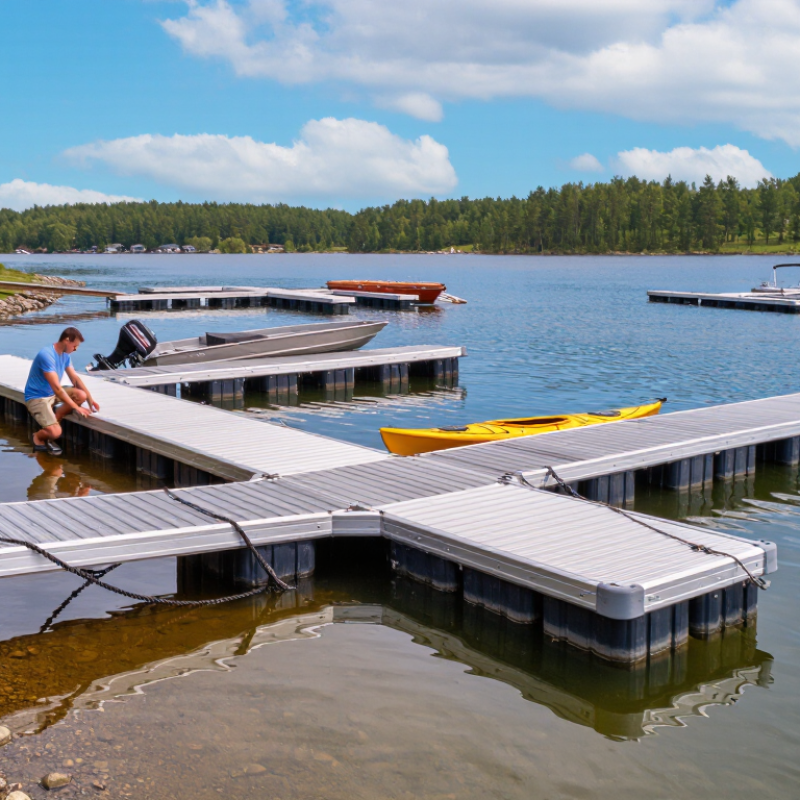
Floating docks differ mainly in how they provide buoyancy, stability, and flexibility. Modular cube docks use interlocking sections, making them easy to expand or rearrange. They suit changing shorelines and seasonal layouts. Pontoon-style docks use sealed floats beneath a stronger frame. They generally feel steadier under heavier loads. Hinged or rolling sections can follow a sloped shoreline, but they need careful installation and regular inspection.
Core features matter more than appearance. Check the dock’s rated load capacity, including people, furniture, equipment, and snow. Freeboard should remain high enough to keep the deck dry during waves. Look for UV-resistant floats, corrosion-resistant fasteners, and decking with reliable traction when wet. Strong connectors reduce movement between modules. Anchoring systems must match water depth, current, wind, and seasonal changes. A simple chain system may not suit an exposed location.
Observe the site at different water levels. This reveals problems that a single visit can hide. I have seen attractive docks become unstable because their anchors were undersized. That mistake is expensive. Uneven weight can also tilt a modular platform, especially when several people gather near one edge. Accessibility deserves attention too; a walkway may need a gentle angle and secure handrails. Specifications are useful, but they cannot replace local measurements. Sometimes a smaller dock performs better because it creates less wind resistance and requires less maintenance.
Assessing Your Site, Water Conditions, and Intended Dock Use
Choosing the best floating dock begins with a close look at the site, not a catalog. Measure shoreline access, water depth, seasonal water levels, and the distance from land to the launch area. A muddy bank may need a longer ramp. A rocky edge may require stronger connection points.
Water conditions can change quickly. Observe wind direction, wave height, current speed, and floating debris during different weather. Check whether ice forms in winter. Ice movement can twist frames, damage anchors, or push the dock toward shore. Professional installers should also assess the bottom material before selecting anchoring methods. Soft sediment may need different support than firm gravel.
Think carefully about how the dock will be used. A small swimming platform has different needs than a dock for kayaks, fishing, or frequent passenger traffic. Estimate the number of users, equipment weight, and required walking width. Non-slip surfaces and stable handrails matter near wet entry points. I once underestimated how much a wide canoe would affect dock access. That mistake changed the layout.
Reconsider maintenance, too. Will you remove the dock seasonally? Can you reach every connection for inspection? A design that looks efficient may become difficult after one storm. Use verified load information, inspect fasteners regularly, and ask qualified professionals about local installation requirements. Good planning feels slow at first. It usually prevents expensive corrections later.
How to Choose the Best Floating Dock for Your Needs
Assess your site, water conditions, and intended dock use before selecting a floating dock system.
The planning scores use a 1–5 scale, where 5 indicates that the factor requires the greatest design attention. Wave exposure increases the need for anchoring and structural stability, changing water levels favor adjustable connections and flotation, while heavier uses require greater load capacity and wider access areas.
Comparing Materials, Stability, Capacity, and Maintenance Needs
Choosing a floating dock starts with its material, but material alone cannot predict performance. Rotomolded polyethylene resists corrosion, absorbs impacts, and needs little seasonal care. Aluminum stays light and strong, though poorly protected joints may develop corrosion. Wood feels solid underfoot, yet it demands sealing, inspection, and replacement of damaged boards. Wet surfaces matter.
Stability depends on float size, connection design, and wave conditions. A wide dock usually feels steadier than a narrow platform. Hinges, brackets, and anchor points should move without excessive play. Test the dock when people stand near one edge, not only when it is empty. Small movements are normal. Excessive rocking is not. Anchoring must suit water depth, current, wind, and seasonal changes. A dock that works on a quiet pond may behave poorly on a windy lake.
Capacity includes people, furniture, equipment, and sudden movement. Check both total load and concentrated load, such as a heavy cooler on one corner. Leave a safety margin instead of using the maximum rating every day. Maintenance is easier when fasteners remain accessible and drainage holes stay clear. Inspect floats for cracks, connectors for looseness, and walking surfaces for algae. A monthly check may be enough in calm water, but busy or harsh sites need more frequent attention. I would not rely on a single brochure figure; actual conditions often expose weaknesses that specifications overlook.
Evaluating Safety Features, Accessibility, and Installation Requirements
How to Choose the Best Floating Docks for Your Needs?
A floating dock should feel stable under changing water conditions. Check its load rating against people, equipment, and expected weather. Non-slip surfaces matter when boards are wet. Rounded edges can reduce injuries during busy use. Handrails should be continuous, secure, and easy to grip. Inspect gaps carefully, especially where children may walk.
Accessibility deserves equal attention. A gentle, stable ramp helps users with mobility limitations reach the dock safely. The ramp should connect smoothly with changing water levels. Consider wider walking areas for wheelchairs, coolers, or emergency movement. Clear lighting can improve visibility, but exposed wiring creates another hazard. I have seen designs that looked accessible on paper but became difficult at low tide. Real conditions can challenge neat measurements.
Tips: Measure water depth at several points. Confirm anchor locations before delivery. Ask a qualified installer to review local requirements and expected wave action. Use corrosion-resistant connectors and inspect them after storms. Leave enough clearance for boats without creating dangerous openings. Installation may require more adjustment than expected, particularly in muddy beds or fluctuating water. A dock that is easy to assemble is not always safe after installation. Check every connection, walk across it slowly, and record maintenance dates. One overlooked bolt can change the whole experience.
Choosing a Floating Dock That Fits Your Budget and Long-Term Plans
Choosing a floating dock starts with your budget, but the cheapest quote rarely shows the full cost. Measure the shoreline, water depth, seasonal changes, and expected boat load before comparing materials. A small dock may suit calm water and light use. Rough water demands stronger connections, flexible hinges, and stable floats. I have found that a comfortable walking surface matters more than glossy finishes. Wet shoes reveal poor traction quickly. Measure twice.
Set aside money for anchors, ramps, hardware, delivery, and periodic replacement parts. These items can quietly exceed the platform price. Ask installers how they handle winter removal, storm preparation, and damaged float sections. Their answers show practical experience better than polished sales language. Check load ratings, fastener quality, UV resistance, and access to future repairs. Confirm local requirements before installation. A dock needing rare parts may become expensive after five years. I once focused too heavily on initial savings and underestimated maintenance time. That was a useful mistake, not a plan.
Match the dock to your long-term plans. If your family may add kayaks, a lift, or a wider ramp, choose a modular layout with room to expand. If relocation is likely, lighter sections can reduce labor and transport costs. Review shoreline conditions each season, especially after ice, flooding, or unusual storms. Keep written notes about loose bolts, shifting anchors, and surface wear. Small problems are cheaper to correct early. Still, flexibility has limits. More sections can mean more joints and more maintenance. Choose the simplest system that supports your real use, not an imagined future.